
Chlorine is part of treatment.Municipal utilities use disinfectants to control germs. Chicago uses chlorine; other utilities may use chloramine.
Naperville, Illinois · Chicagoland water filtration
Better water.
Clear answers.
No sales pitch.
Understand your water, compare published prices, and choose a system that fits your home.
Start with your utility’s official report. Then test what matters at your tap.
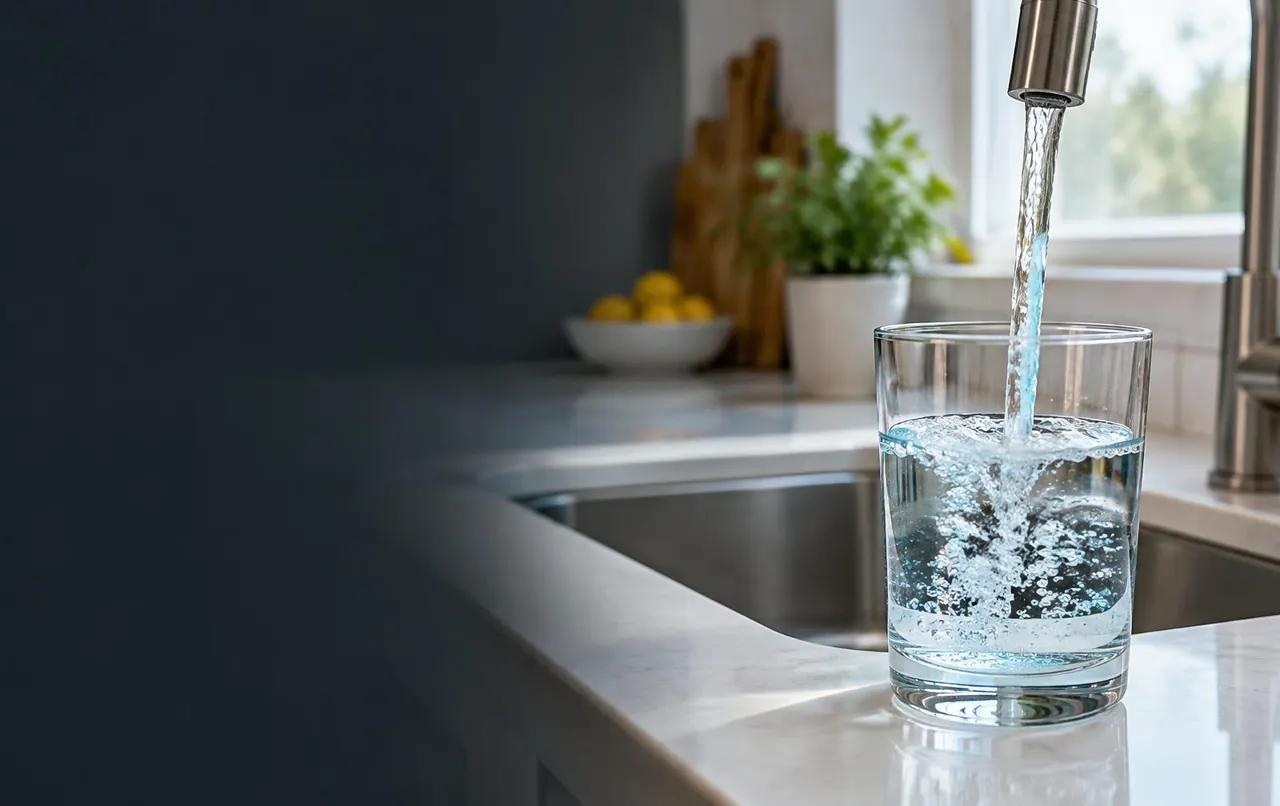
Know what reaches your tap
Treated at the plant.
What about your tap?
Lead is a possible plumbing concern.Lead can enter from service lines, faucets, or other plumbing. A utility report cannot test the pipes in your home.
Prices you can compareKnow the proposed scope upfront
Advice for your waterSource, testing, and your priorities
Installation explainedEquipment, plumbing, and upkeep
The facts behind your faucet
Did you know?
Chicago’s water treatment is designed to disinfect water and protect it as it travels through the system. The plumbing between the water main and your faucet still matters.
About 400,000 lead service lines
Chicago estimates that roughly 400,000 service lines contain lead. That is a pipe count for Chicago—not a finding that every home’s water contains lead.
Check Chicago’s service-line informationTreatment chemicals have different jobs
Chicago uses chlorine to control microbes, adds fluoride for dental health, and uses orthophosphate to help reduce pipe corrosion. “Added” does not mean “unsafe”; amount, purpose, and measured results matter.
Read Chicago’s annual water-quality reportChicagoland is not one water system
Some suburbs buy treated Chicago water; others blend sources or use wells. Your water bill identifies the utility whose report applies to your address.
Find your utility’s water reportBottled doesn’t always mean plastic-free.
Researchers have detected micro- and nanoplastics in bottled-water samples. Reverse osmosis (RO) systems can reduce microplastics—but performance depends on the model and proper maintenance. Look for an independently verified microplastics-reduction claim.
Read the bottled-water research Check NSF’s microplastics-reduction listings Explore under-sink ROA public water report describes utility-level results. It cannot test the pipes or water at your individual tap. Chicago residents can also request a test from the city.
Choose what you want to solve
Different water.
Different answer.
Spots, buildup, and stiff laundry?
A softener treats calcium and magnesium. Start with a hardness test, whether your supply is municipal or well water.
Explore softener packagesLooking for better-tasting water?
Whole-home carbon and under-sink filtration serve different purposes. Match the filter to the concern you want to address.
Explore city water solutionsClear from the start
One home. The right system.
Start with softening, add whole-home filtration, or choose the complete package with kitchen drinking water. Well-water systems start with lab results.
Why our prices are lower
No commissioned salespeople. No door-to-door pressure. Direct equipment sourcing and professional installation help keep costs down.
Suburban Scale Stopper
Water softener
$2,499*
Our installed price
- Softens water to reduce hardness and scale
- Helps protect plumbing and appliances
- Includes installation, setup, and initial salt
City Water Defender
Softener + whole-home carbon
$2,899*
Our installed price
- Softens water to reduce hardness and scale
- Filters chlorine taste and odor throughout the home
- Includes both systems, installation, and setup
Most Popular
Whole Home Purifier
Softener + carbon + kitchen RO
$3,399*
Our installed price
- Softening and chlorine taste filtration throughout the home
- Kitchen RO system with a dedicated drinking-water faucet
- Includes installation, setup, and old-system haul-away
Well Water Rescue
Iron, sulfur + softener
From $4,899*
Our installed price
- Targets hardness, iron staining, and sulfur odor
- Equipment matched to lab results and well flow
- Includes installation and post-install testing
* These prices are for homes with up to 3.5 bathrooms. Proposed scope: equipment, standard installation, standard permits, taxes, and haul-away.
Custom plumbing is assessed and quoted before approval. Equipment models and certified reduction claims are confirmed with your proposal.
Read the source
Your water report is a good first step.
Find your utility’s annual results, learn what the numbers mean, and bring your questions to a consultation.
ContactInside a utility report
- Where your water comes from
- Detected regulated contaminants
- Results compared with legal limits
- The reporting year and supplier contacts
A clear path from question to installation
Know what happens next.
Understand your water
Review your supplier’s report, your concerns, and any home test results.
Review the proposal
Confirm equipment, installation scope, maintenance costs, and any plumbing changes.
Choose when you’re ready
Ask questions, compare your options, and approve the work before scheduling.
Why Arctic Water Filtration
Built for families.
Priced with purpose.
Arctic Water Filtration starts with a simple belief: everyone deserves access to clean drinking water. We want to make reliable filtration affordable for working families, without putting unnecessary pressure on the household budget.
We choose equipment from established, well-known brands and keep our business lean. Direct sourcing, fewer middlemen, and low overhead help us keep prices down. You pay for the equipment and installation, rather than expensive offices or commissioned sales pitches.
Read our storyStraight answers
Frequently asked questions
Do I need a drain for a water softener?
A traditional softener needs an approved drain connection. A plumber checks the available drain, air gap, and routing before installation.
Can you install in a home on a concrete slab?
Often, yes. Tank space, the main water line, and drain routing need to be evaluated first. Tell us about your layout when requesting a water test.
Will a pitcher or refrigerator filter fix hard water?
Typical taste-and-odor filters do not remove dissolved calcium and magnesium. An ion-exchange softener treats hardness; contaminant reduction depends on the specific filter and its certification.
Is a salt-free conditioner the same as a softener?
No. A conditioner does not remove hardness minerals. A softener removes calcium and magnesium through ion exchange. The appropriate choice depends on your goals and water test.
What does the installation price include?
The listed prices are for homes with up to 3.5 bathrooms. The proposed packages include equipment, standard installation, standard permits, taxes, and haul-away. Any additional plumbing should be identified and quoted before you approve the work.
Does my utility report tell me what is at my tap?
It describes the public water system, but it does not measure every individual home. Your service line and plumbing can affect tap water. Private wells need their own testing.
An easy next step
Tell us what you’re noticing.
Share your address and water concerns. Request a test, a virtual conversation, or help reading your report.
Start my request